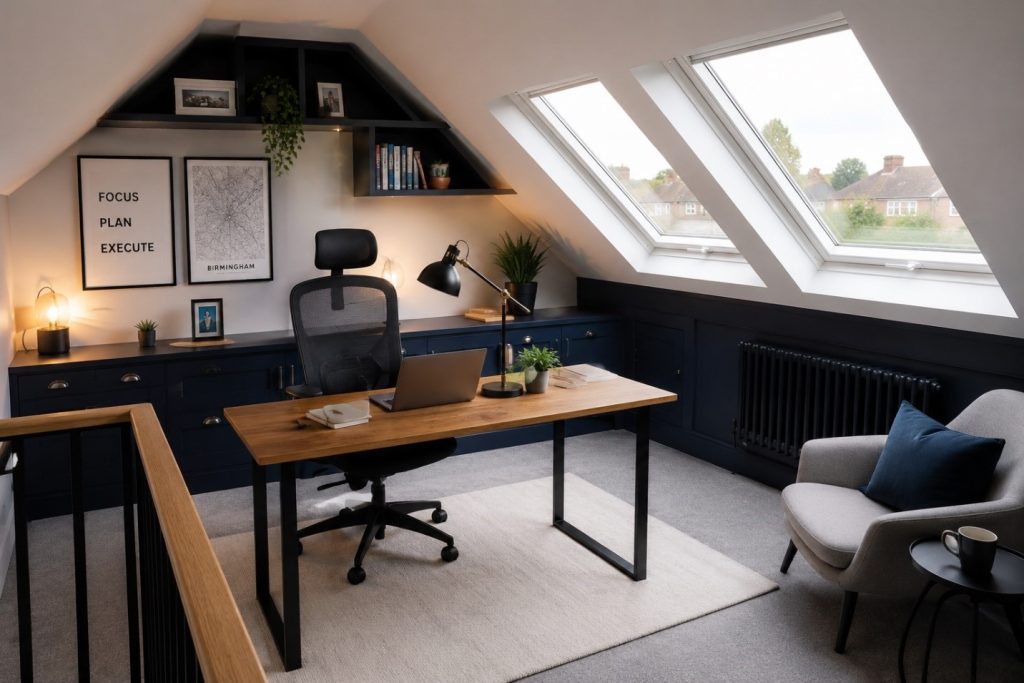
Working from the kitchen table or a corner of the bedroom might have been fine for a few weeks, but if home working has become a permanent part of your life, it stops being a temporary fix and starts being a genuine problem. A loft home office is one of the best solutions we come across, giving you a proper separate workspace without eating into any of your existing living space. Done well, it’s quiet, private, and completely yours.
Here’s how to make a loft office conversion actually work for you.
Why a Loft Makes Sense for a Home Office
Unlike converting a spare bedroom or boxing off part of a living room, a loft office conversion uses space that was previously going to waste. It’s naturally set apart from the rest of the house, which means fewer interruptions, less noise from downstairs, and a clear physical and mental separation between “home” and “work” something that’s surprisingly hard to achieve when your desk is a few steps from the sofa. For anyone who’s tried to concentrate on a video call while the rest of the household is going about its day, the appeal of a dedicated attic office is obvious.
Making the Most of an Awkward Shape
Lofts aren’t naturally rectangular, tidy rooms, and that’s the main challenge with loft workspace design. Sloped ceilings and low eaves can eat into usable floor space if you don’t plan around them properly. The trick is to put your desk where the ceiling height works best usually near a dormer window or the tallest part of the roof and use the lower, sloped areas for storage, bookshelves, or seating instead of anywhere you need to stand or move around freely. This way, every part of the loft earns its keep rather than sitting there unused.
Natural Light Matters More Than You’d Think
Good lighting isn’t just nice to have in a home office it genuinely affects how productive and comfortable you feel working there. Roof windows are brilliant for this, letting in far more natural light than a standard wall-mounted window would, and often giving you a pleasant view of the sky rather than a neighbour’s fence. Position your desk to make the most of this natural light without creating glare on your screen, and you’ll notice the difference within the first week of working up there.
Insulation and Temperature Control
Lofts can run hot in summer and cold in winter if they’re not properly insulated, and nothing kills productivity faster than a room that’s uncomfortable to sit in for eight hours. Proper insulation, both in the roof and the floor, is essential for any loft conversion ideas involving year-round use, and it’s worth getting this right from the start rather than trying to fix it with a space heater later.
Storage and Cable Management
A cluttered home office undoes a lot of the benefit of having a separate workspace in the first place. Built-in shelving that follows the slope of the roof, under-eaves cupboards, and planned power points for your equipment all help keep the space functional and tidy. Thinking about where your cables, printer, and filing will live before the build starts, rather than after, saves a lot of hassle down the line.
Sound and Privacy
If you’re regularly on calls, some basic soundproofing between floors is worth considering, particularly if the rest of the household is active downstairs during your working hours. A solid door and decent floor insulation go a long way toward keeping your loft office genuinely quiet.
Getting It Built Properly
A loft office conversion still needs to meet the same building regulations as any other loft conversion proper staircase access, adequate headroom, fire safety, and structural checks all apply, even though the room’s purpose is different from a bedroom. At Warmer’s Lofts, we’ve helped homeowners across Birmingham and the West Midlands design loft offices that are genuinely comfortable to work in every day, not just on paper. As a family-run business with over ten years of experience, we’ll talk you through what your particular roof space can realistically offer before any work begins.
If you’re ready to swap the kitchen table for a proper home office, get in touch for a free, no-obligation quote.
FAQ
How can I turn my loft into a comfortable home office?
A loft can be converted into a dedicated home office by planning the layout around the available headroom, natural light, storage, insulation, and workspace requirements.
Is a loft a good space for a home office?
Yes, a loft can provide a quiet and private workspace while making use of space that might otherwise go unused in your home.
How can I make the most of an awkward loft shape for an office?
Place the desk in areas with the most ceiling height and use low or sloped areas for storage, bookshelves, or seating.
Are roof windows suitable for a loft home office?
Yes, roof windows can provide plenty of natural light and can help create a more comfortable and productive loft workspace.
How important is insulation for a loft home office?
Proper roof and floor insulation is essential to help keep a loft office comfortable throughout the year, especially during hot summers and cold winters.
How can I add storage to a loft office without wasting space?
Built-in shelving, under-eaves cupboards, and planned storage can make use of awkward areas while keeping the loft office tidy and functional.
Does a loft home office need to meet building regulations?
Yes, a loft office conversion needs to meet relevant building regulations, including requirements for staircase access, adequate headroom, fire safety, and structural checks.
